AI Cameras for Indoor Farms: How to Design a Useful Pilot
Build a camera pilot around one growing decision, reliable images and a test that measures useful alerts in your own facility.
Explore the guide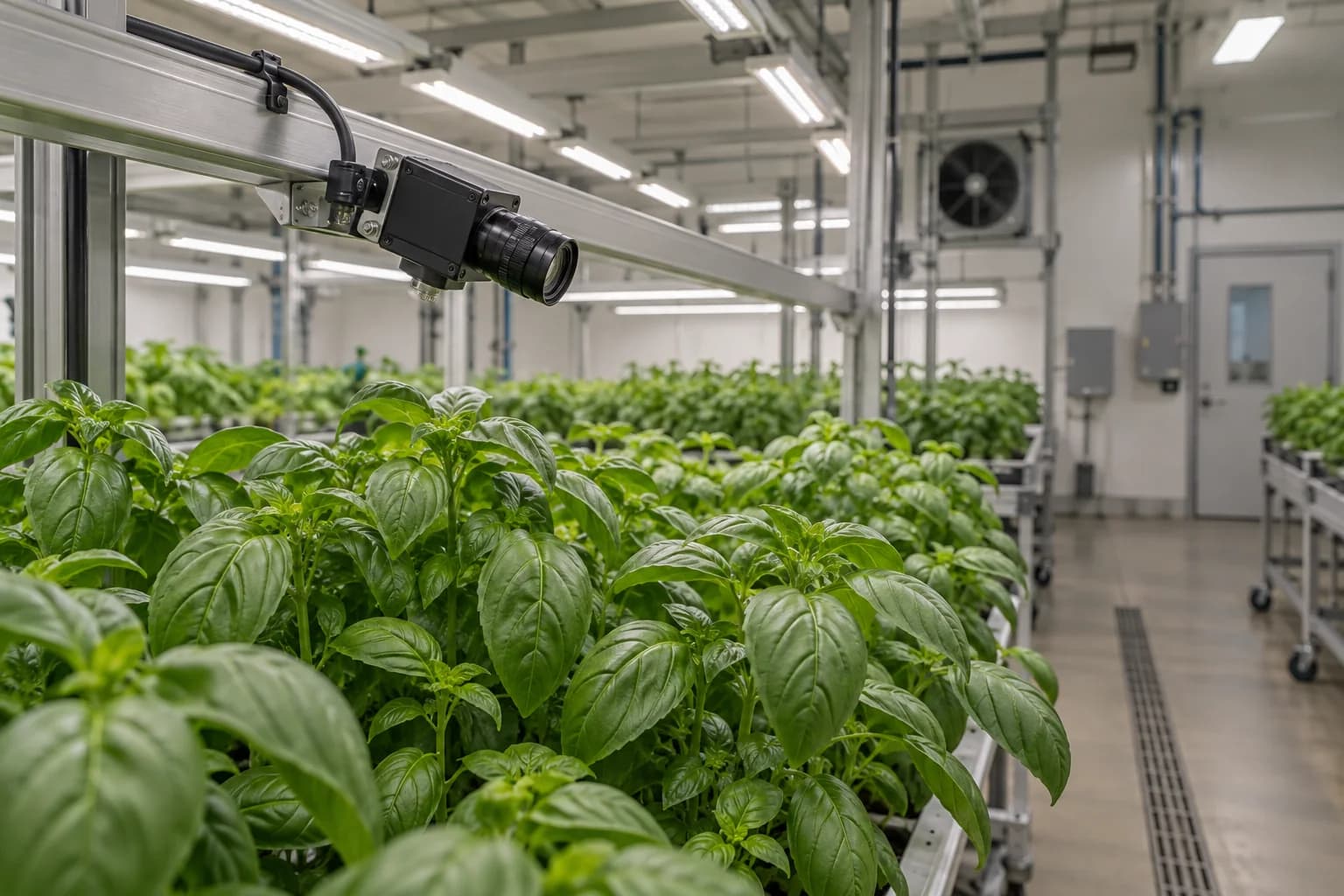
A useful camera pilot starts with a decision: which observation should make a grower inspect a crop, and how soon? The model comes after that question. This guide sets out Hamfy’s proposed approach to a first deployment, from camera position to a reviewable decision log.
One observable task
Choose a visible change and a named person who can act on it.
A separate test crop
Evaluate on a later cycle or independent growing zone.
Useful alerts
Measure missed events, false alerts and review time together.
Start with a decision a grower actually makes
“Monitor plant health” is too broad for an acceptance test. A better first question is whether a camera can help an operator find a defined visible change in a known crop and growing zone. Write down the observation, the inspection it should trigger and the latest useful time for that inspection. A colour change may justify a closer look; it does not, by itself, identify the cause.
Before collecting a large dataset, agree on what success would change in the working day. Would a useful alert direct a scout to a particular bench? Would a daily canopy measurement help identify an uneven batch? Compare the proposed output with the current scouting routine. A camera that produces more pictures without changing a decision has not yet demonstrated operational value.
Make the images comparable before training a model
PlantCV’s documentation recommends defining the analysis goal before choosing the imaging arrangement and testing a small image set before committing to full acquisition. It also discusses viewpoint, background and colour reference choices. These are useful starting points for a capture protocol. PlantCV analysis approaches.
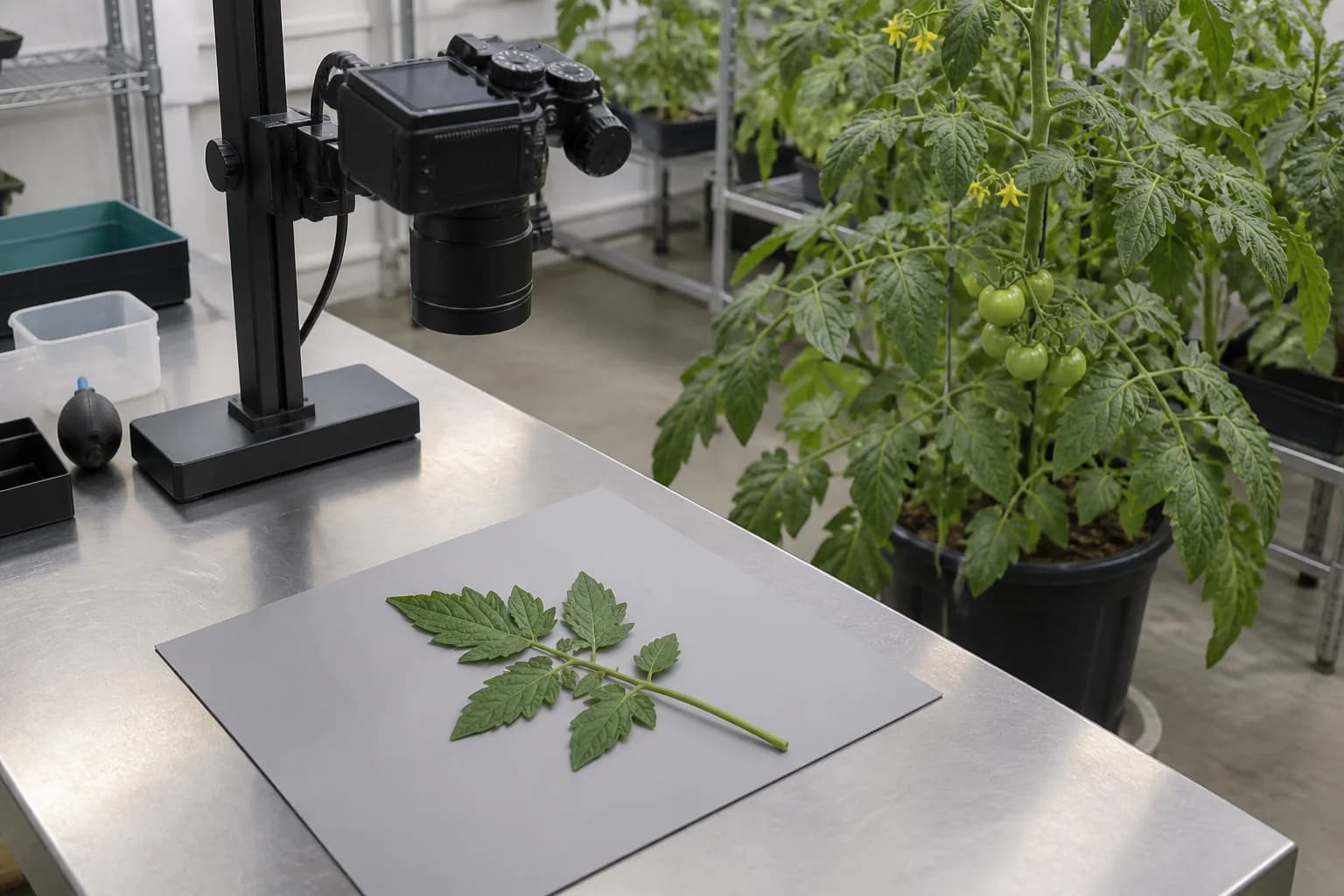
For an indoor pilot, Hamfy proposes a written capture specification: camera position, visible bench area, lens settings, capture schedule and the lighting state at each exposure. Check a nearly empty bench as well as a full canopy. Include a cleaning and remounting check so that a moved camera is recorded as a change in the measuring system.
Keep the original image and its timestamp. Associate it with a zone, crop, batch and crop stage, then record interventions such as pruning or a lighting adjustment. The MIAPPE metadata standard provides a useful reference for describing plant phenotyping experiments. A small, consistently completed record is more useful than a large set of optional fields nobody maintains.
From image to a checked observation
- 01Capture
Image, time, zone and lighting state
- 02Context
Crop batch, stage and recent work
- 03Review
Observation and operator decision
- 04Evaluate
Confirmed event, missed event or false alert
Keep an independent test that resembles the next deployment
Avoid distributing near-identical images of one plant or one event across training and testing. For a practical pilot, hold back a later crop cycle or an independent zone, keep its labels out of model development and record any differences from the training conditions. This is Hamfy’s proposed validation design; the appropriate split depends on what the system will encounter next.
Set aside ambiguous observations instead of forcing every image into a confident diagnosis. Have a qualified reviewer define the labels and the evidence needed to confirm them. If the task is detecting visible wilting, test that observation. If the task is identifying a disease, establish a separate confirmation process. Those are different claims and need different evidence.
The NIST AI Risk Management Framework calls for evaluation in the intended context and continued monitoring. For this pilot, translate that principle into a named test set, a fixed model version and a written record of why each alert was accepted or rejected.
Measure events and workload, not just image accuracy
Define an event before counting it. Twenty alerts from adjacent frames of the same affected bench should not automatically count as twenty successful detections. Agree on a time window and growing zone for grouping repeated observations, and preserve the underlying records for review.
Report confirmed events found, confirmed events missed, false alerts per zone per day and operator review time. Where timing matters, report how much useful notice an alert provided relative to the existing process. Show the number of events behind each percentage; a promising result based on three events is still a very small pilot.
Keep technical availability separate from agronomic performance. A camera can be online while looking at an obstructed canopy. Log missing captures, unusable images and periods outside the agreed operating conditions. These records explain whether a quiet dashboard means a stable crop or missing evidence.
Finish with a decision to extend, revise or stop
Start with observation and human review. Before considering any connection to climate or irrigation control, require a separate approval step with defined operating limits and a fallback to the existing controller. A successful monitoring pilot does not establish that automatic intervention is ready.
The final pilot report should contain the tested scope, representative successes and failures, the independent test results and the cost of maintaining the setup. Extend the pilot when the result is useful within that scope. Revise it when a specific capture or labelling problem is fixable. Stop when the output cannot support a worthwhile decision.
To turn these questions into a facility brief, use the project preparation guide. For the evidence behind testing outside the training environment, read our PlantVillage case analysis.
Common questions
Can a normal RGB camera diagnose every plant problem?
No. A visible symptom can have several causes, and some problems are not visible to an RGB camera. Define the observation the system can support and the additional inspection or measurement needed to confirm its cause.
How many images are enough for a pilot?
There is no defensible universal number. Start with the task’s variety, the frequency of relevant events and the independence of the test data. A large collection of almost identical frames is not the same as coverage of different batches, stages and operating conditions.
Sources & research
Primary sources selected for this article. Reviewed by Hamfy on .
Designing a camera pilot that produces usable evidenceRead the research brief · scope, findings and limitations- Technical documentation · v4.4Analysis approachesPlantCV documentation
Supports decisions about capture conditions and image analysis. It does not establish the performance of a Hamfy model.
- Research data standard · Accessed 2026Minimum Information About Plant Phenotyping ExperimentsMIAPPE community
Provides a reference for documenting experimental context and making observations interpretable.
- Public framework · 2023AI Risk Management Framework: CoreNIST
Supports context-specific evaluation, responsibility and monitoring. It is not a crop model certification.
Have a correction or additional project evidence? Contact the Hamfy team.
Turn a camera idea into a testable pilot
Describe your crop, growing zones and the decision you want to improve. Hamfy can help scope the data collection, software and evaluation work.