HLVd in Cannabis: Symptoms, Testing and Monitoring
What hop latent viroid symptoms can and cannot tell you, why laboratory testing matters and how photographs and traceability support a professional monitoring plan.
Explore the guide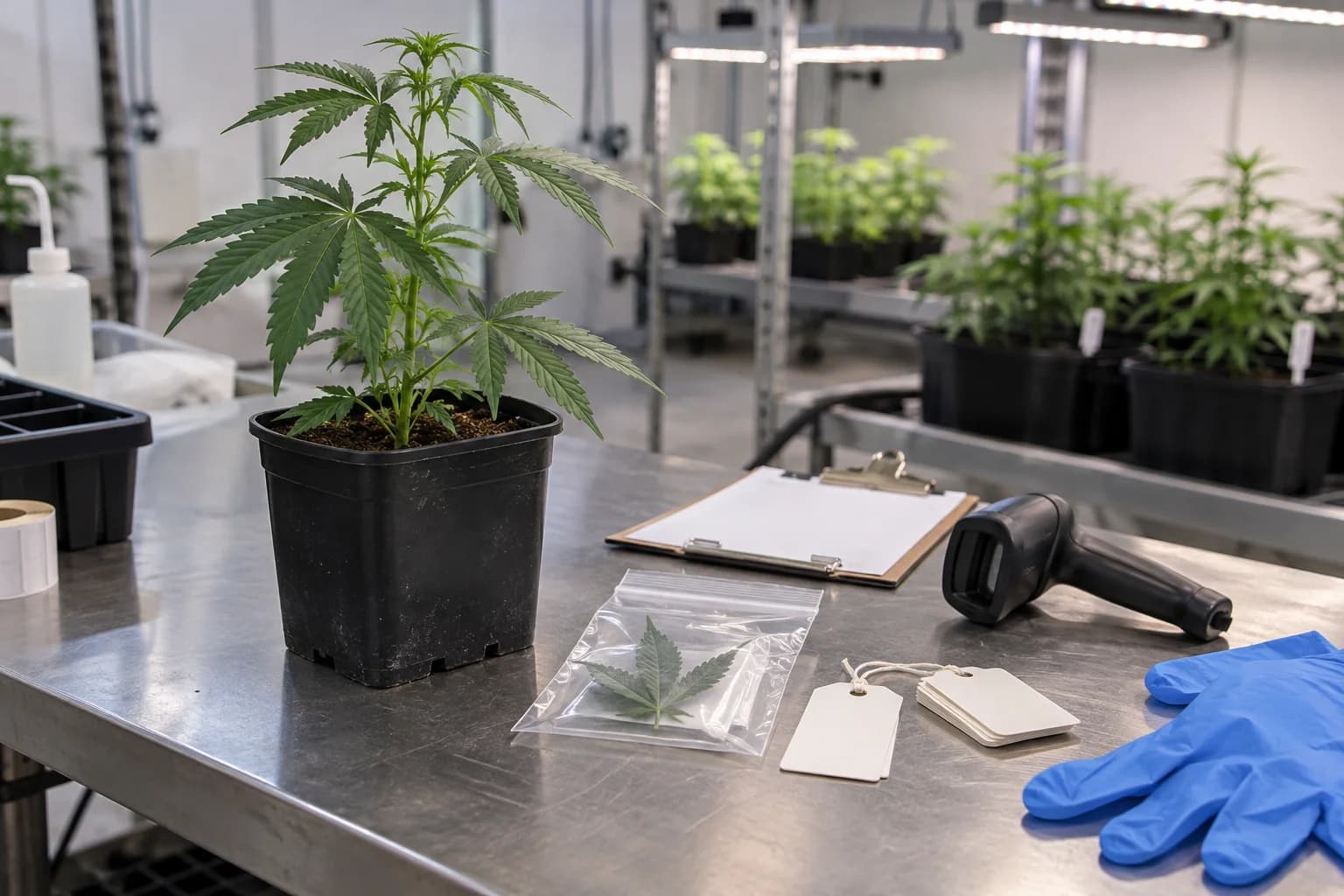
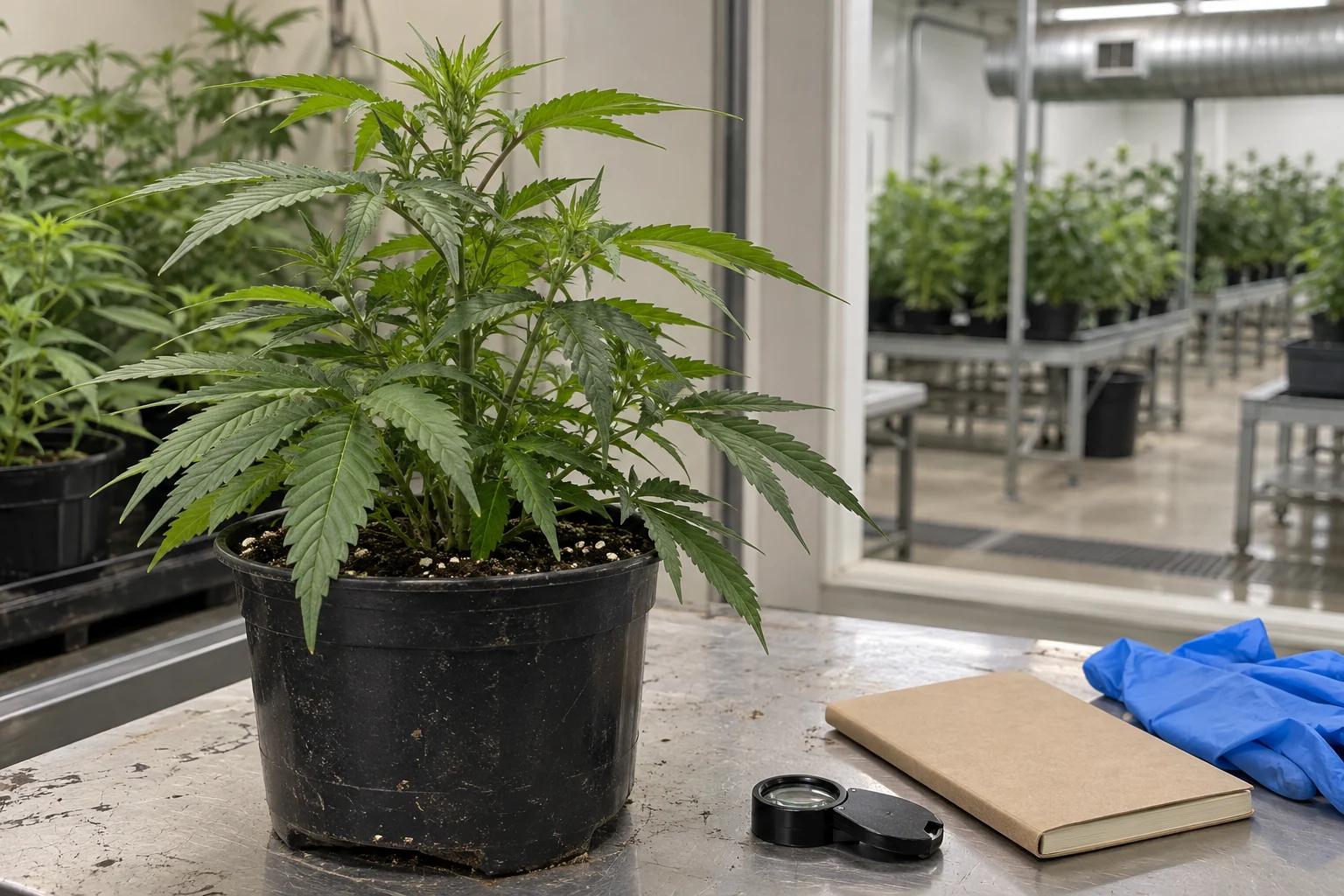
Hop latent viroid can be present in cannabis without an obvious visual warning. Poor growth or unusual leaves can justify investigation, but a photograph cannot confirm HLVd or clear a plant as uninfected. Useful monitoring connects observations, plant identity and an appropriate laboratory result.
Symptoms are not a diagnosis
Similar changes have multiple possible causes; an apparently healthy plant can still be infected.
Plan testing with the laboratory
Sample choice, timing, handling and the assay affect what a result can support.
Keep the evidence connected
Link photographs, plant or batch IDs, sampling dates and laboratory reports.
What is HLVd, and what might an operator notice?
Hop latent viroid is a small infectious RNA agent: a viroid, not a fungus or bacterium. Reports in cannabis describe stunting, reduced vigour and other variable changes, sometimes called dudding. None is specific enough for a visual diagnosis. Oregon State University's hemp guidance also describes infections without clear symptoms. A symptom list is therefore a reason to investigate, not a reliable screening certificate for incoming plants.
Why a healthy-looking plant does not rule it out
The 2019 California report detected HLVd in an asymptomatic plant as well as symptomatic plants in the investigated material. That observation establishes a limitation of visual screening; it does not give a universal prevalence or test accuracy. Keep incoming-stock history and plant identity available. A camera can document a change relative to the same plant or group, but cannot determine whether the agent is present.
Arrange a meaningful laboratory test
Ask a plant-diagnostic laboratory which HLVd assay it uses, which material and timing it recommends, and how it interprets a negative or inconclusive result. Confirm its instructions before collecting and sending samples. A 2023 detection-method study compared testing approaches and plant tissues; it is a reminder that sampling context matters, not a guarantee for every commercial test. Do not invent a universal tissue rule, testing interval or numerical cutoff from a single study.
Interpret the result within its actual scope
A positive result supports detection in the tested material according to the laboratory's method and controls; it does not by itself quantify crop loss or establish the status of every related plant. A negative result means the target was not detected within that test's limits and sample context, not that the whole facility is free of HLVd. Resolve inconclusive findings with the laboratory. Keep the original report and its qualifications with the sample record.
What each type of evidence can support
| Evidence | Reasonable conclusion | Conclusion it cannot establish |
|---|---|---|
| Unusual growth in an image | A documented change deserves investigation | Confirmed HLVd infection |
| No visible symptoms | No visual abnormality observed at that time | A plant free of HLVd |
| Positive laboratory result | Target detected in tested material within the reported method | The severity or status of every plant |
| Negative laboratory result | Target not detected under the reported test conditions | The entire facility is free of the agent |
Use cameras for traceability and change detection
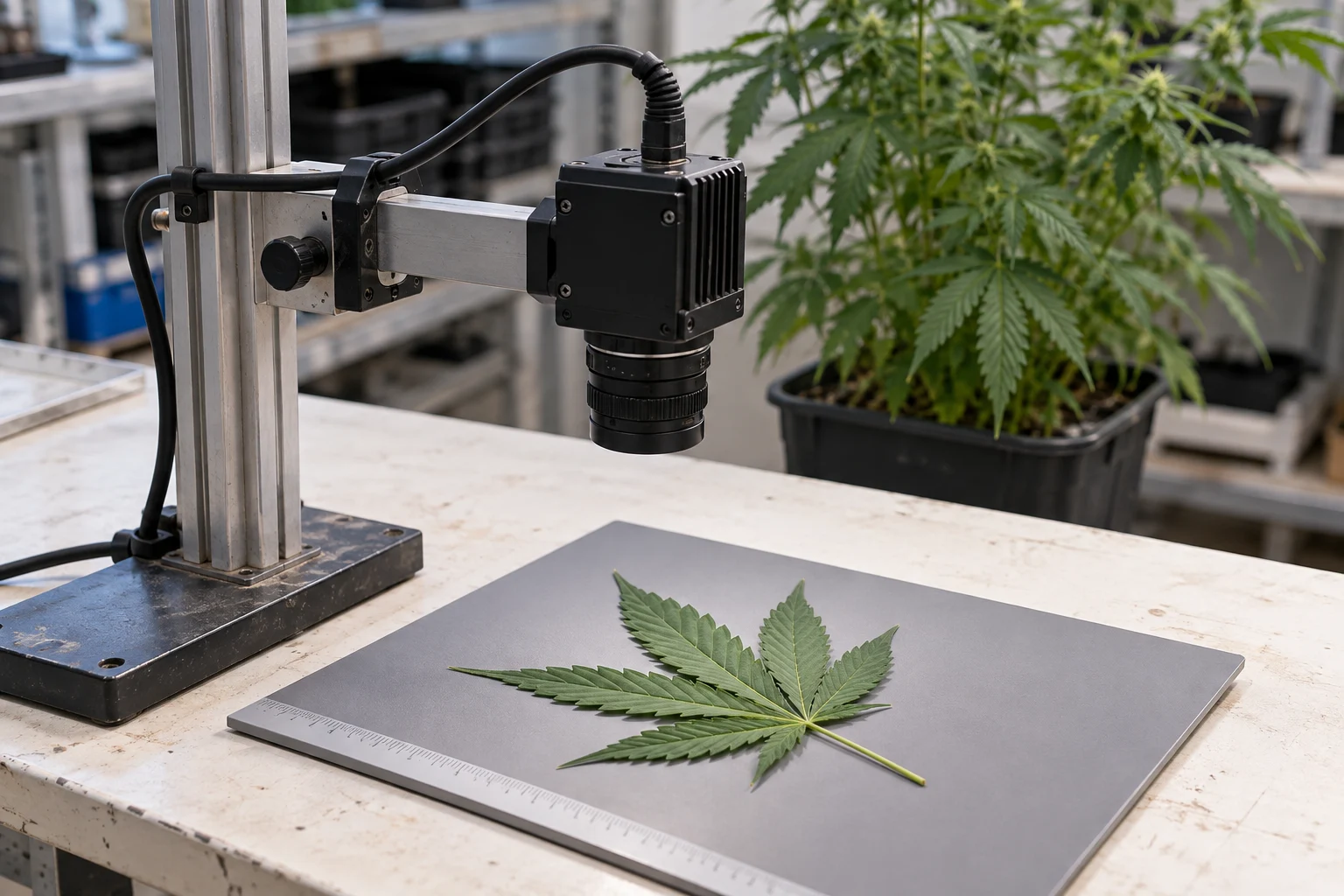
Capture consistent views, scale and lighting when documenting a concern. Link each image to a stable plant or batch identifier, location, date and operator observation. Record the laboratory sample ID separately so the two cannot be confused. Our plant-disease photography guide explains this division of work. An AI alert can prioritise inspection; calling it an HLVd diagnosis would require evidence the image alone does not provide.
From an observation to a traceable decision
- 01Observe
Consistent photograph, location, date and description of the change
- 02Identify
Plant or batch ID and relevant incoming-stock history
- 03Coordinate testing
Laboratory instructions, sample ID and the question being tested
- 04Review and follow up
Report, interpretation limits, responsible person and next action
Build a response that follows the evidence
Plant material, sap contact and contaminated tools can matter for spread, as discussed in OSU's guidance. Review stock sourcing, traceability and separation of suspect material with the responsible plant-health specialist. Use a documented hygiene procedure appropriate to the operation rather than a treatment claim copied from social media. Do not infer pathogen freedom from clean-looking tools or a single negative test. For the broader context, see our guide to cannabis plant pathogens.
Common questions
Can AI identify HLVd from a photograph?
A photograph can show changes, not directly establish HLVd infection. Do not treat a visual model's label as a substitute for a suitable laboratory test.
Can an infected plant look healthy?
Yes. Asymptomatic infection has been reported. Appearance alone cannot establish the status of a plant or incoming batch.
Does one negative result clear all the plants?
No. The conclusion depends on the tested material, sampling plan, method and timing. Discuss the scope and need for follow-up with the laboratory.
Is this an HLVd field trial conducted by Hamfy?
No. This is our technical synthesis of cited public evidence and a proposed monitoring workflow. We do not present a Hamfy diagnostic test or claim measured detection accuracy.
Sources & research
Primary sources selected for this article. Reviewed by Hamfy on .
Evidence brief: HLVd observation, testing and traceabilityRead the research brief · scope, findings and limitations- Technical source · 2024Hop latent viroid in hempCynthia M. Ocamb · Oregon State University Extension
Extension guidance on HLVd in hemp, variable presentation, transmission concerns and testing. We do not transfer chemical-treatment recipes into this article.
- Technical source · 2019Occurrence of Hop Latent Viroid in Cannabis sativa with Symptoms of Cannabis Stunting Disease in CaliforniaPlant Disease
Original report documenting HLVd in investigated cannabis material, including an asymptomatic plant. It is not a representative prevalence survey.
- Technical source · 2023A Novel, Precise and High-Throughput Technology for Viroid Detection in Cannabis (MFDetect™)Viruses
Primary comparison of detection approaches and plant tissues. Used to explain testing context, not to endorse an assay or claim universal performance.
Have a correction or additional project evidence? Contact the Hamfy team.
Turn observations into useful decisions
Discuss a monitoring plan with Hamfy: what to measure, where to measure it and which evidence an alert should trigger.