Indoor oyster mushroom cultivation: substrate, climate and harvest
A practical guide to Pleurotus ostreatus: choosing blocks, separating incubation from fruiting, reading CO₂ trends and measuring harvest performance.
Explore the guide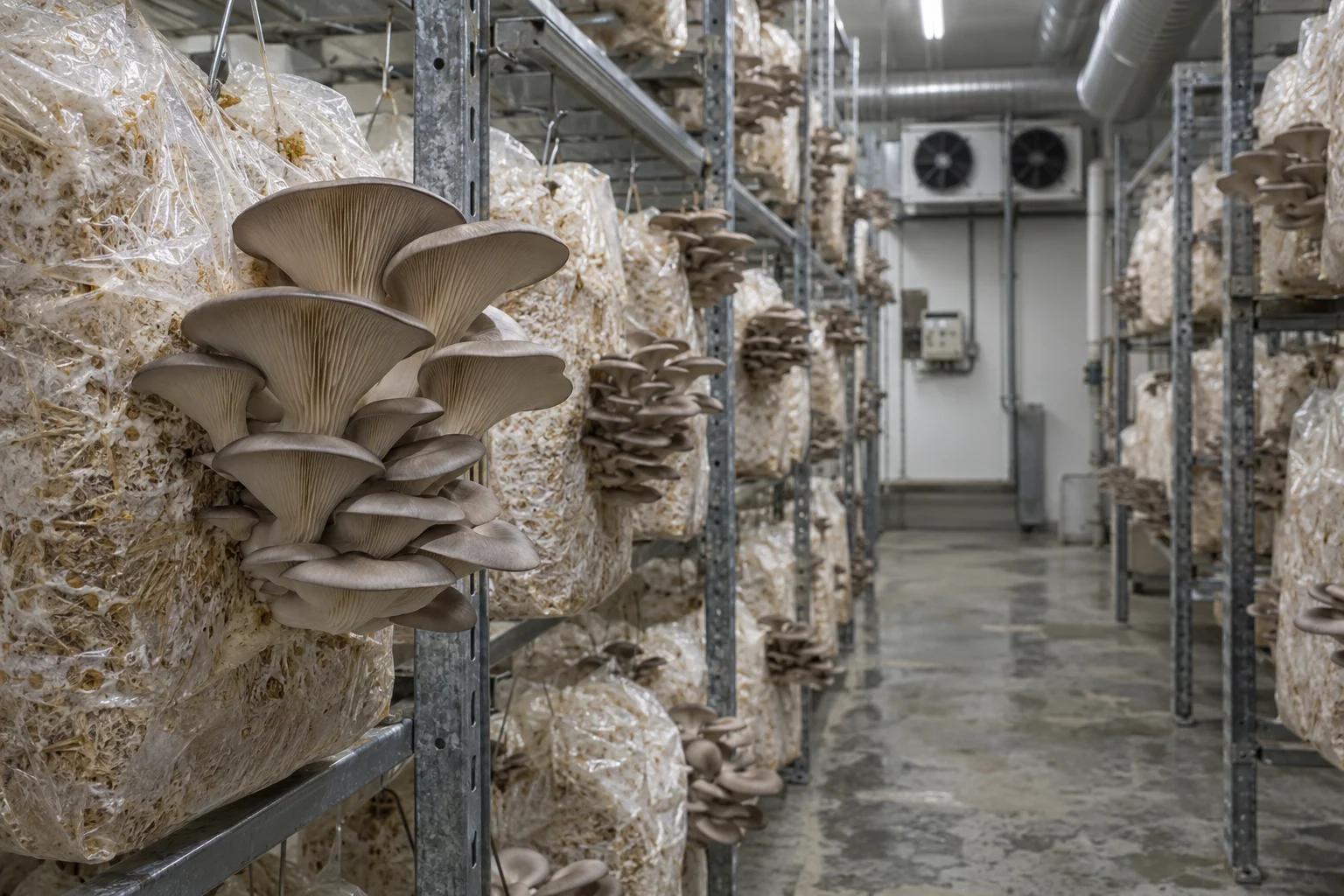
Growing oyster mushrooms indoors is a sequence of biological stages supported by a controllable room. A successful batch starts with a suitable strain and substrate, then needs a different environment as mycelium gives way to fruiting bodies. The useful question is what each stage requires and how you will verify it.
Specify the strain
Pleurotus ostreatus is a species, not one universal temperature recipe.
Separate the stages
Incubation and fruiting place different demands on the room.
Measure the outcome
Link harvest quality and losses to a batch, location and climate history.
Choose the part of production you will manage
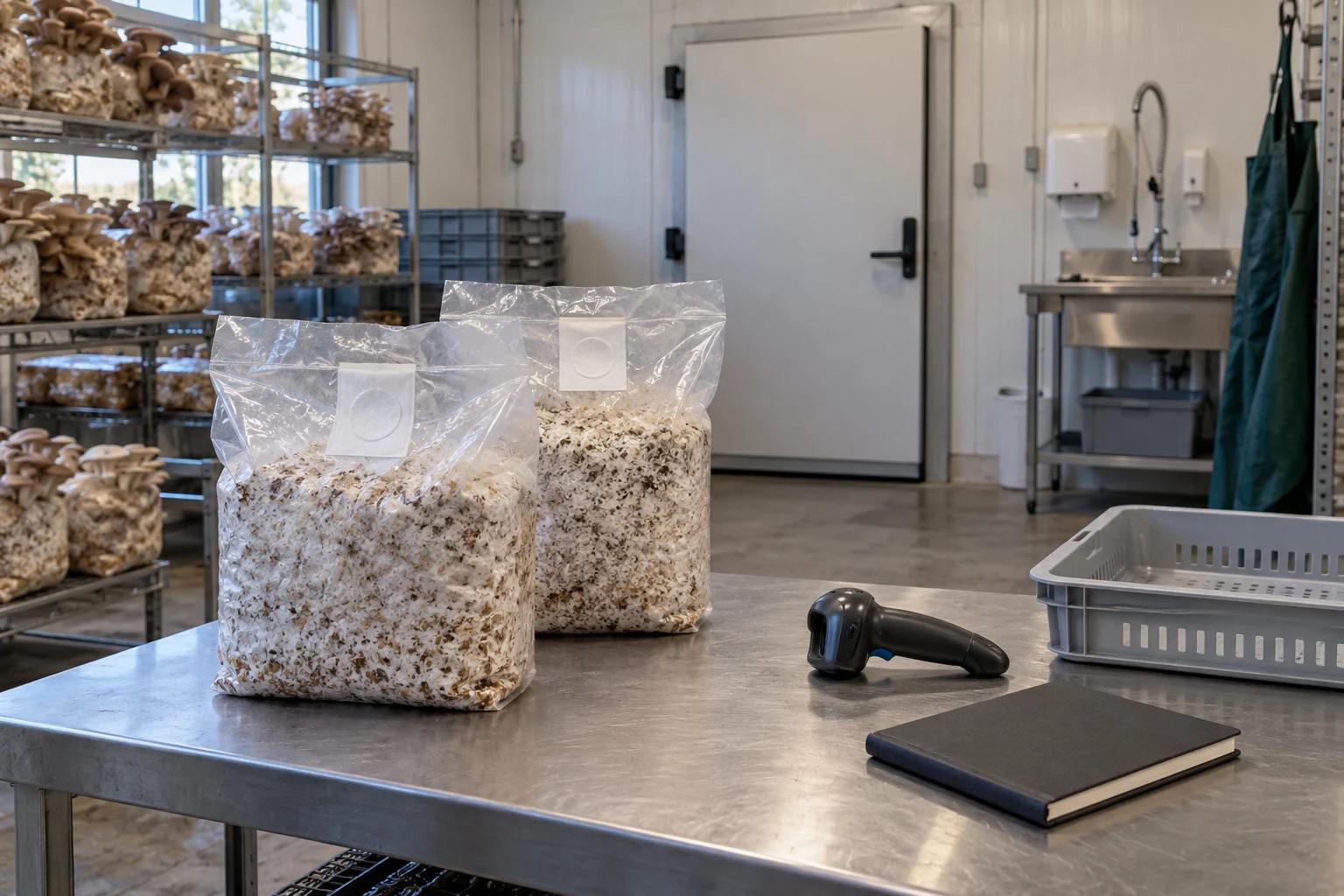
A grower can buy ready-to-fruit blocks or make substrate blocks from purchased spawn. Producing spawn is another operation again. Cornell describes these as distinct business choices: buying blocks simplifies the initial process but creates dependence on delivery quality and timing. Making blocks adds substrate preparation, treatment, clean inoculation and incubation. Start by writing down which stages happen on site before sizing rooms or promising weekly output. Production options.
Match the substrate to a repeatable process
Pleurotus can use several lignocellulosic materials. Cornell describes straw cultivation and supplemented sawdust blocks as separate approaches. A richer recipe is not automatically a better starting point: nutrient supply, moisture, treatment and hygiene have to work together. Pasteurisation and sterilisation are different treatments, not interchangeable words. Follow a validated process for the chosen material and load; the temperature of a machine is not proof that the centre of every bag received the intended treatment. Cultivation methods.
Incubation: follow the block, not only the wall thermometer
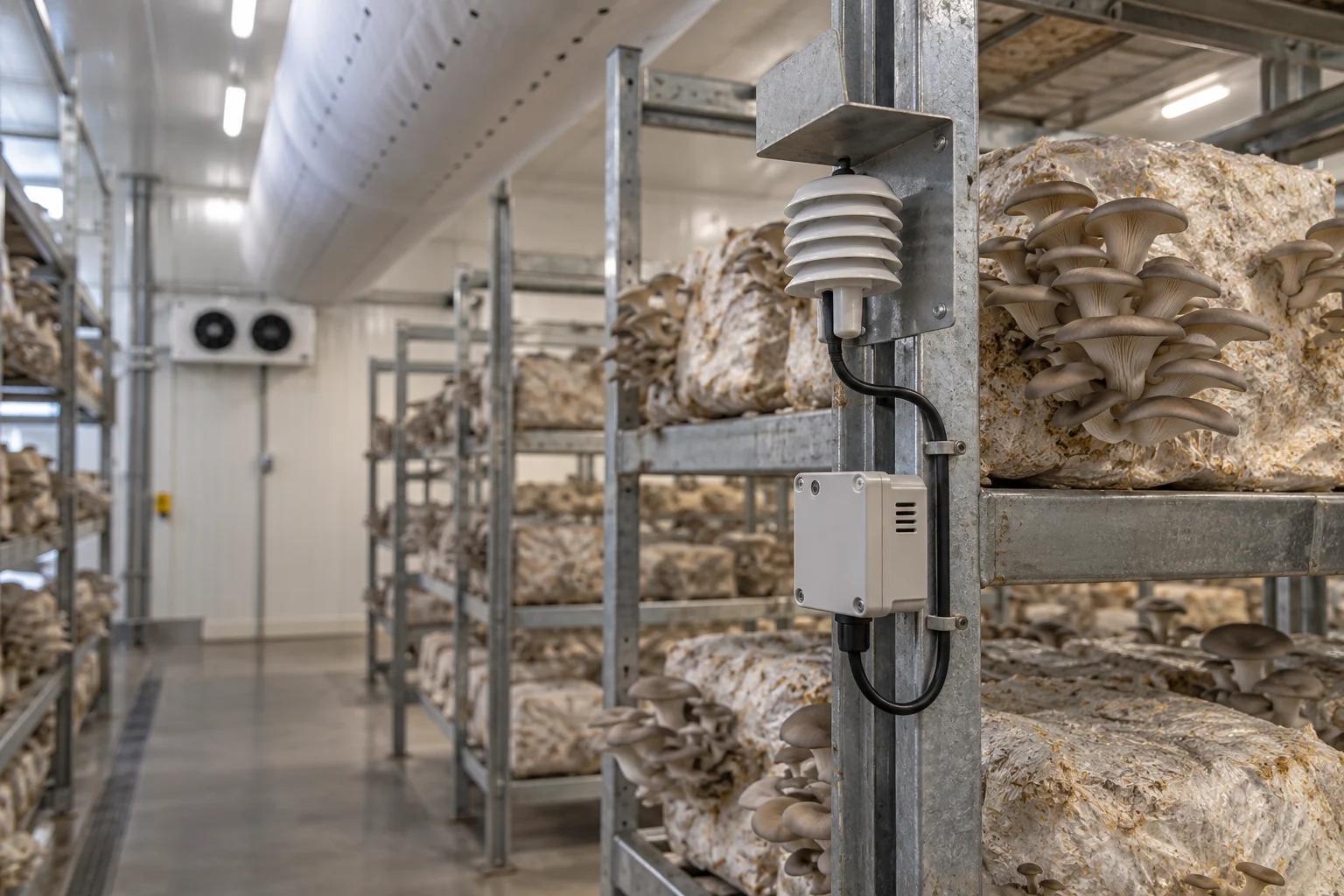
During incubation, record strain, inoculation or receipt date, batch identity and room position. Track colonisation and investigate blocks that develop differently from their neighbours. Respiring substrate can generate heat, so an acceptable air reading does not establish the temperature inside the block. For a new layout, compare representative core measurements and air measurements without repeatedly opening production bags. Agree a hygienic sampling method with the supplier. Keep delivery damage and pre-existing abnormalities in the receiving record.
Four handovers to document
- 01Receive or inoculate
Supplier, strain, batch and condition
- 02Incubate
Colonisation, time and block temperature
- 03Fruit
Room position, climate and first pins
- 04Harvest and review
Marketable weight, losses and occupancy
Fruiting: fresh air and moisture must work together
Move mature blocks into the supplier's fruiting programme, using its instructions for opening the bags, temperature and light. Exchange room air to remove accumulated CO₂; a circulation fan alone moves the same air. A primary experiment showed that high CO₂ changed the morphology of P. ostreatus. This supports monitoring the gas environment, but does not make one cap shape a diagnostic test or provide a universal commercial threshold. CO₂ experiment.
Ventilation also changes heat and moisture. Strong local drafts can dry exposed surfaces while another shelf remains damp. Compare readings near the crop and inspect the distribution of changes. Our climate-control guide explains how to separate an airflow problem from a misleading humidity reading.
Harvest for quality and keep the batch identity
Define a harvest specification with the buyer and strain supplier: cap development, texture, damage and pack format matter alongside weight. Use clean suitable containers, handle clusters carefully and move harvested product into the agreed cold chain promptly. Log harvest time and batch before mixing material from different shelves. Cornell's handling guidance emphasises maturity and gentle handling; its storage examples should be adapted to the product and local food-safety plan. Harvest handling.
Decide whether the next flush earns its space
Record marketable kilograms per block received, rejected blocks, room occupancy days and harvest labour. Keep the first and later flushes separate. A later flush may add weight while delaying the next batch, so compare contribution per occupied rack-day as well as total yield. In Hamfy's proposed record, the denominator includes failed blocks: silently excluding them makes an unreliable process look productive. A recurring loss should lead to the batch investigation workflow, not an automatic change to every climate setting.
Common questions
Can all oyster varieties share one climate programme?
No. Species sold as oyster mushrooms and strains within a species differ. Confirm the supplier's incubation and fruiting requirements before sharing a room.
Does a long stem prove that CO₂ was too high?
No. Morphology can prompt an investigation, but gas measurements, light, strain, development stage and local airflow provide the context.
Is buying ready-to-fruit blocks a reasonable first step?
Yes, when supply quality, logistics and margin work. It lets a grower evaluate fruiting and sales before taking on block production.
Sources & research
Primary sources selected for this article. Reviewed by Hamfy on .
Evidence brief: a measurable oyster mushroom cycleRead the research brief · scope, findings and limitations- Research / technical guidance · n.d.Indoor ProductionCornell Small Farms Program
Separation of spawn, block and fruiting businesses; no universal profitability claim adopted.
- Research / technical guidance · n.d.Four Methods of Commercial CultivationCornell Small Farms Program
Straw and supplemented-block methods; treatments must match the substrate.
- Research / technical guidance · 2023Cauliflower-shaped Pleurotus ostreatus cultivated in an atmosphere with high environmental carbon dioxide concentrationMycologia · Zhang et al.
Primary experiment on CO₂ and morphology, not a Hamfy trial or a universal set point.
- Research / technical guidance · n.d.Post-Harvesting HandlingCornell Small Farms Program
University guidance on maturity, handling and refrigerated distribution.
Have a correction or additional project evidence? Contact the Hamfy team.
Make your mushroom room easier to understand.
Discuss the measurements, cameras and operating records your facility needs. Start with a defined problem and an observable outcome.