Indoor shiitake cultivation: from substrate blocks to harvest
Understand shiitake block maturation, browning, fruiting induction and rest periods, with practical records for managing quality and room occupancy.
Explore the guide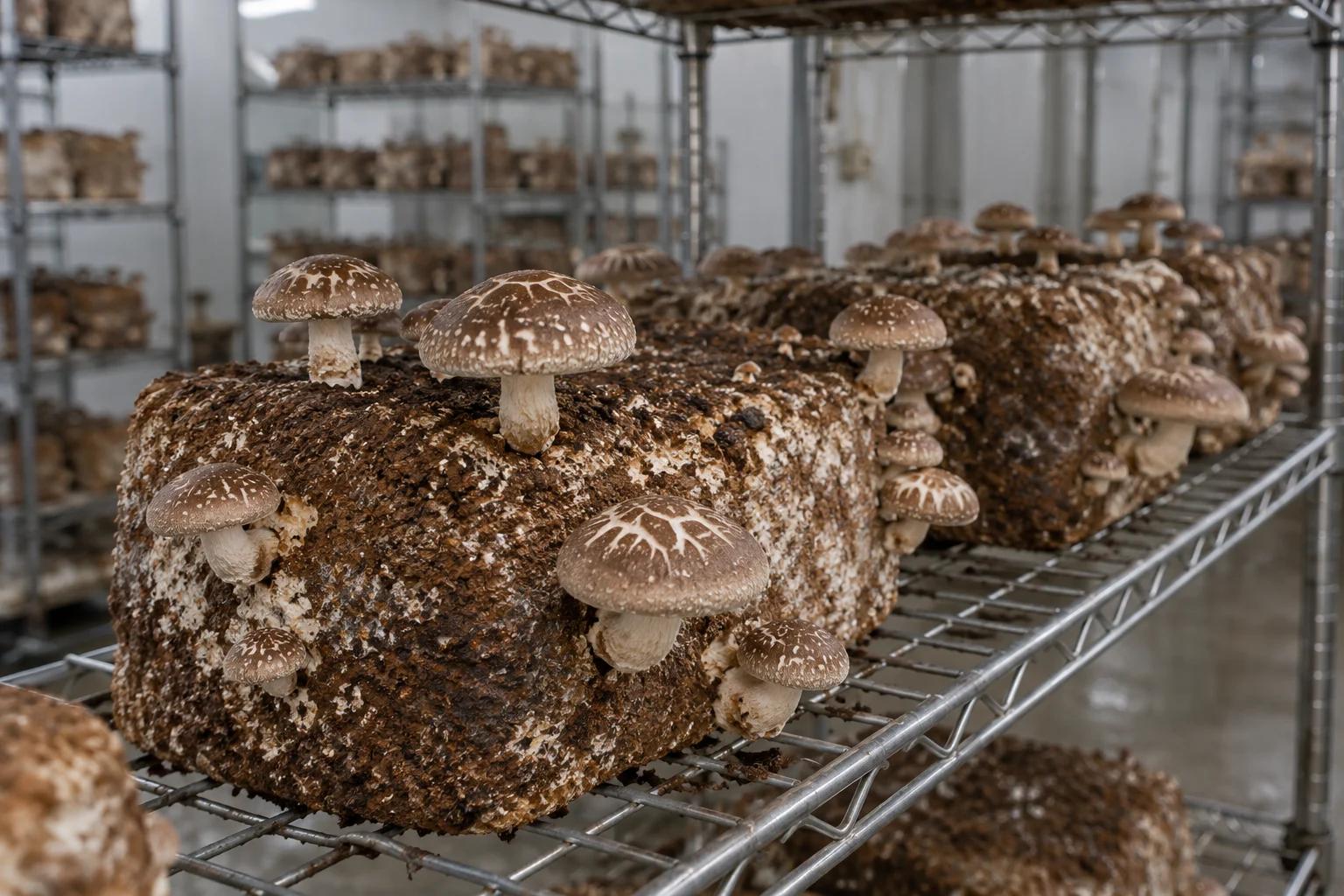
For Lentinula edodes, a colonised block is not automatically a block ready to fruit. Maturation and browning are central to planning an indoor crop. The room schedule needs to follow biological readiness as well as the order book.
Maturation is a stage
Record browning and block development separately from receipt or inoculation.
Use the strain protocol
Induction, hydration and recovery depend on the block and strain.
Plan the whole cycle
Later flushes occupy space and require their own quality assessment.
Specify the block you are buying or making
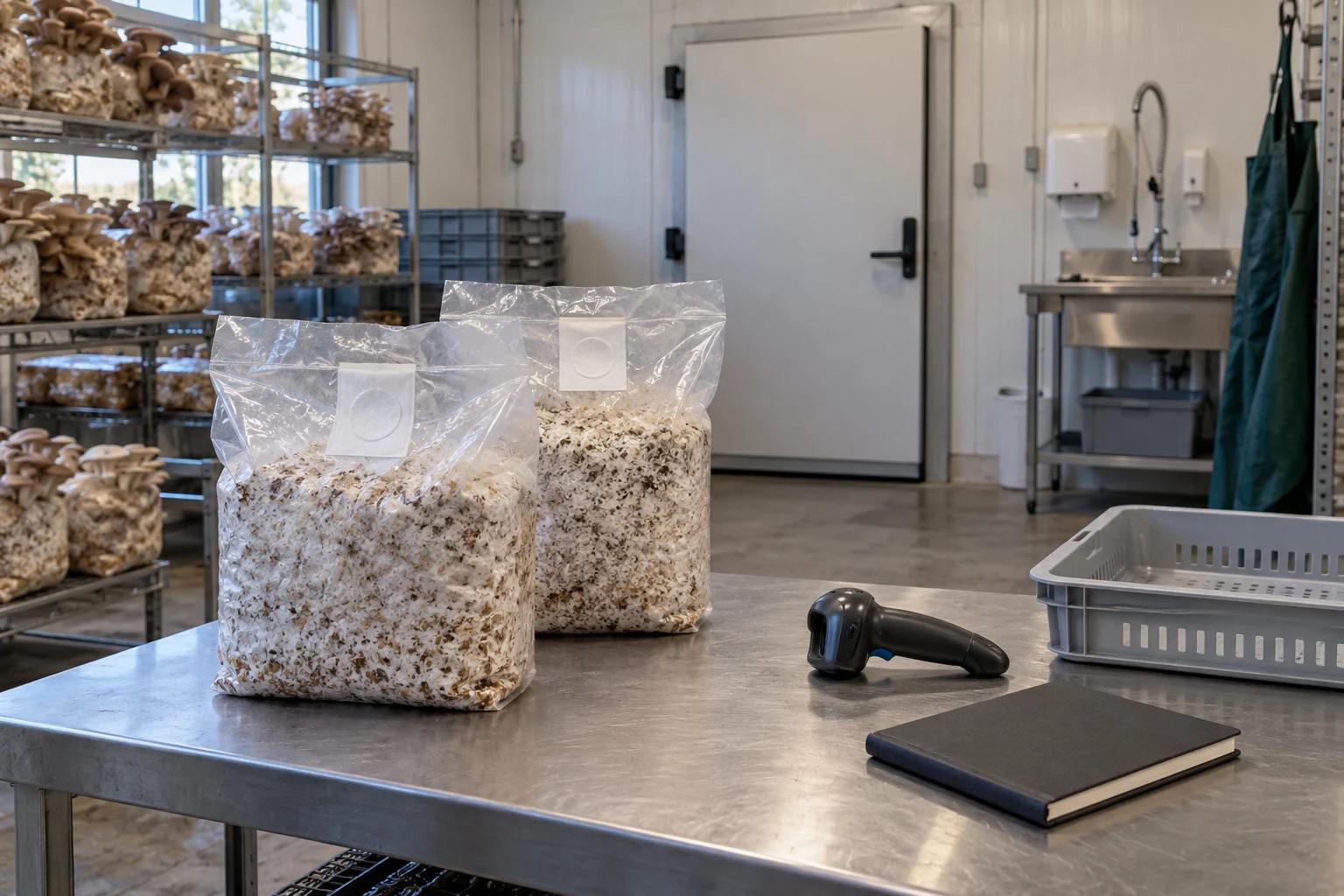
Indoor shiitake commonly uses supplemented sawdust blocks, sometimes called synthetic logs. They differ from natural hardwood logs in preparation and scheduling. Specify strain, substrate, block size, production date, maturation state and the supplier's handling instructions. A consignment described only as fully colonised leaves an important question unanswered: what must happen before it is ready for fruiting? Penn State's production overview separates colonisation, browning and induction. Production technology.
Follow browning without turning colour into a diagnosis
The outer block surface normally changes as it matures and develops a brown rind. Photograph representative blocks under consistent light and record stage transitions. A brown surface is therefore not, by itself, a contamination finding in shiitake. Conversely, a familiar colour does not certify a healthy block. Compare distribution, texture, timing and supplier guidance. Unexpected changes belong in a separate observation record; organism identification requires suitable investigation, not a colour label from a camera.
Induce fruiting only in a ready batch
Commercial programmes may use hydration and a temperature change to initiate fruiting; exact handling depends on strain and block condition. Follow the supplied programme instead of transferring a soaking schedule from outdoor logs to indoor blocks. Manage water quality, containers and batch separation as part of the process. Record treatment start, end, block condition and entry into the fruiting room. Published production schedules describe particular systems rather than a guaranteed number of days for every supplier.
A shiitake block needs more than a calendar
- 01Colonisation
Confirm substrate and strain history
- 02Maturation
Assess the expected browning stage
- 03Induction and fruiting
Use the block-specific programme
- 04Harvest and recovery
Review quality before the next cycle
Manage the fruiting room as a separate environment
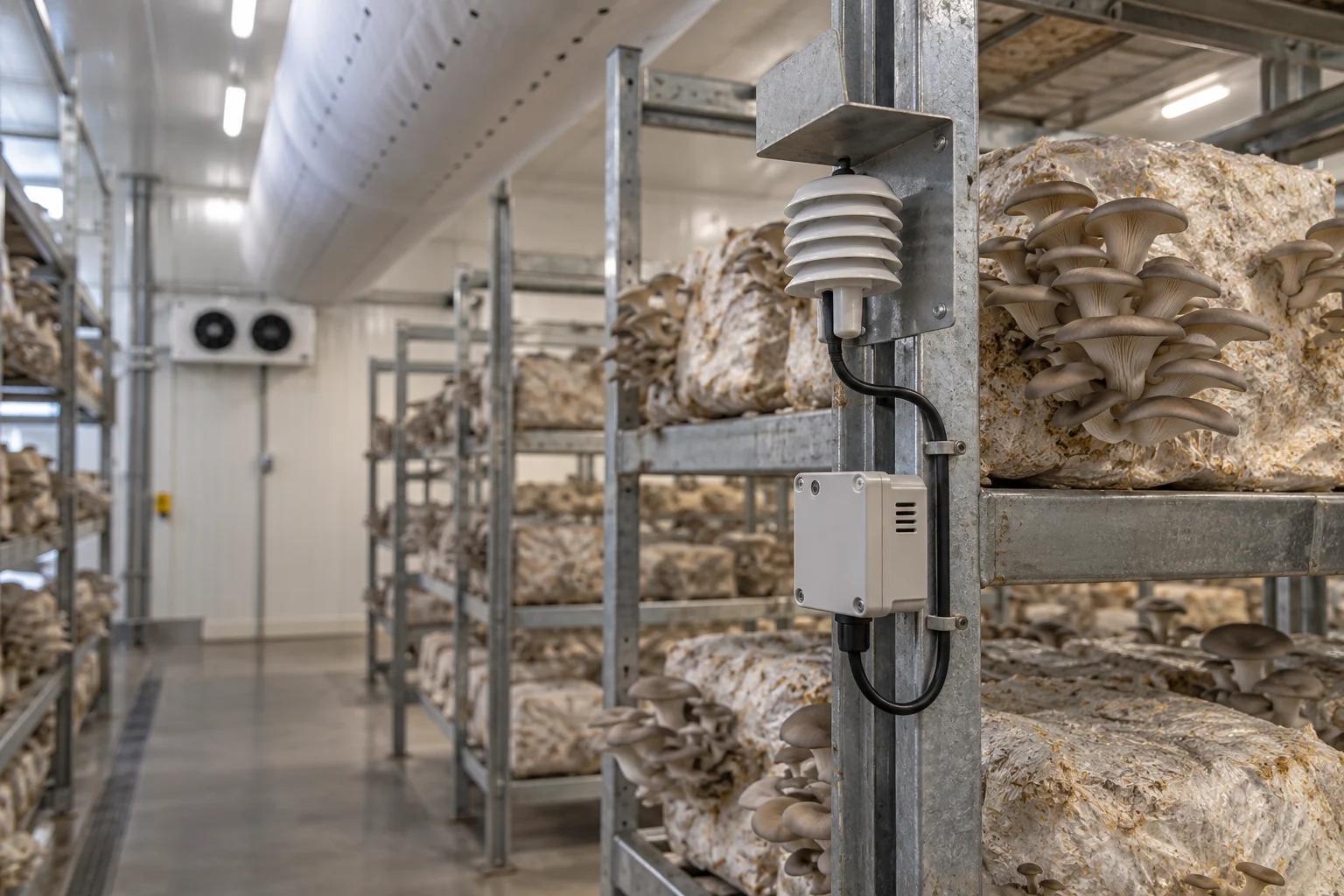
Provide the temperature, humidity, fresh-air exchange and light specified for that crop stage. Keep exposed blocks from sitting in water and inspect both cap condition and distribution around the shelves. Monitor the room with sensors protected from direct spray. When several batches share one room, check that their requirements and stages are compatible. Cornell stresses matching species, strains and substrates to conditions the building can maintain reliably. Indoor system choices.
Harvest maturity and recovery both affect the schedule
Define the desired cap development with the customer and harvest consistently. Avoid treating maximum cap size as the sole quality goal. Gentle handling, clean containers and a suitable cold chain matter after picking. Between flushes, follow the strain's recovery and rehydration programme; do not assume an exhausted or suspect block will perform like a fresh one. Cornell's handling guidance illustrates the importance of maturity and storage. Harvest quality.
Build a block history that survives several flushes
Hamfy's proposed batch record preserves receipt, maturation checks, each induction, each harvest and final removal. Calculate marketable kilograms per received block and occupied rack-days, with rejects shown separately. If one batch fruits late, first compare its maturation and treatment history with a comparable batch. Changing the entire room can obscure the original cause. Link those records to the climate guide and contamination workflow so that a delay, visual change and confirmed finding remain distinct.
Common questions
Does browning mean that a shiitake block is contaminated?
Not by itself. Browning is part of normal maturation, but unfamiliar changes still require contextual assessment.
Can an oyster mushroom programme be used for shiitake?
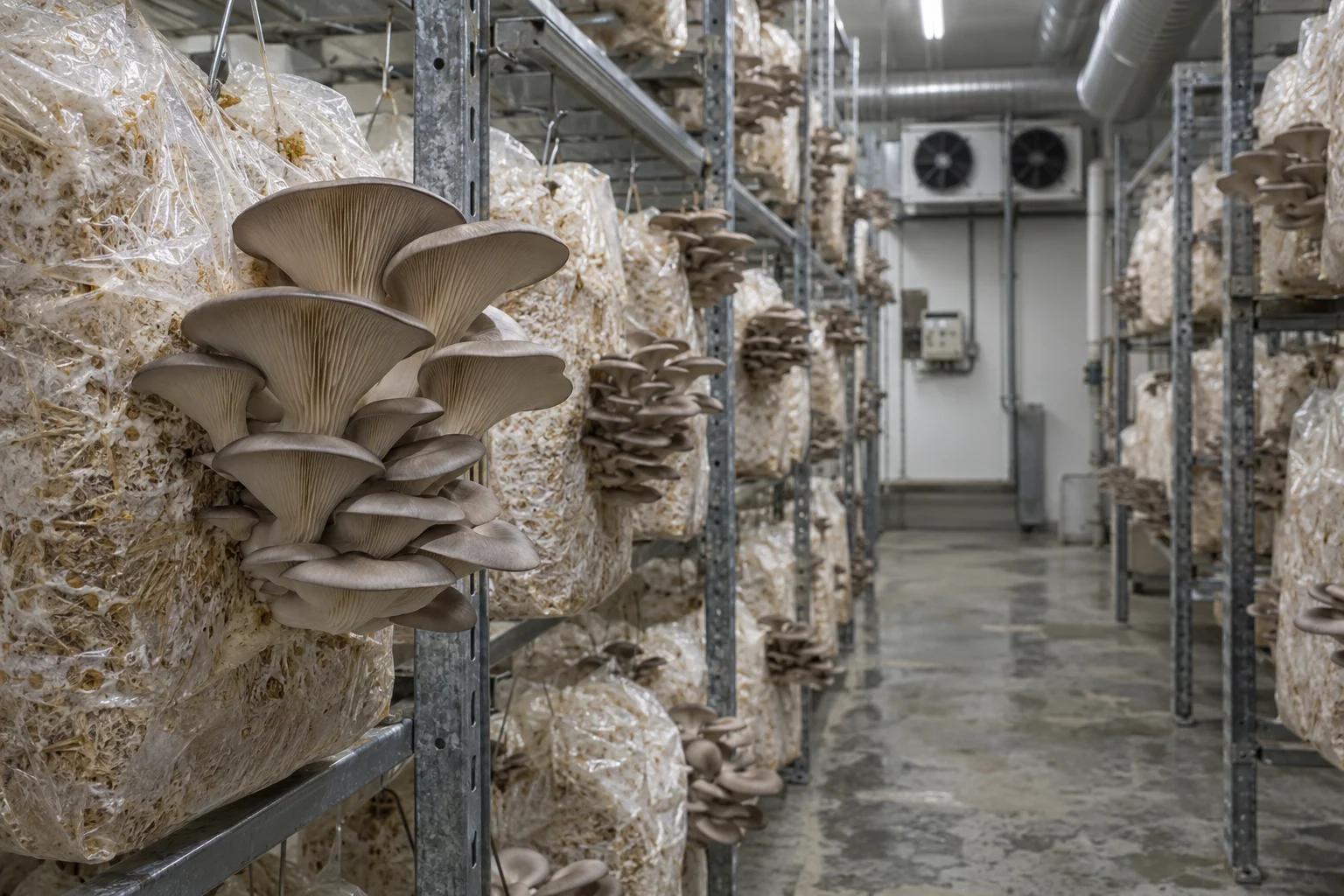
Do not assume it can. Block maturation, induction and recovery differ, and each strain needs an appropriate programme.
How many flushes should we keep?
There is no single profitable number. Compare later harvest quality and contribution with occupancy, labour, block condition and the next batch.
Sources & research
Primary sources selected for this article. Reviewed by Hamfy on .
Evidence brief: readiness and scheduling in indoor shiitakeRead the research brief · scope, findings and limitations- Research / technical guidance · n.d.Production Technology · Lentinula edodes: synthetic log productionPenn State · Department of Plant Pathology and Environmental Microbiology
University overview of synthetic shiitake blocks, maturation and induction; historical timings are not universal targets.
- Research / technical guidance · n.d.Indoor ProductionCornell Small Farms Program
Matching strains and workflows to a controllable environment.
- Research / technical guidance · n.d.Post-Harvesting HandlingCornell Small Farms Program
Handling and maturity principles; no universal shelf-life guarantee adopted.
Have a correction or additional project evidence? Contact the Hamfy team.
Make your mushroom room easier to understand.
Discuss the measurements, cameras and operating records your facility needs. Start with a defined problem and an observable outcome.