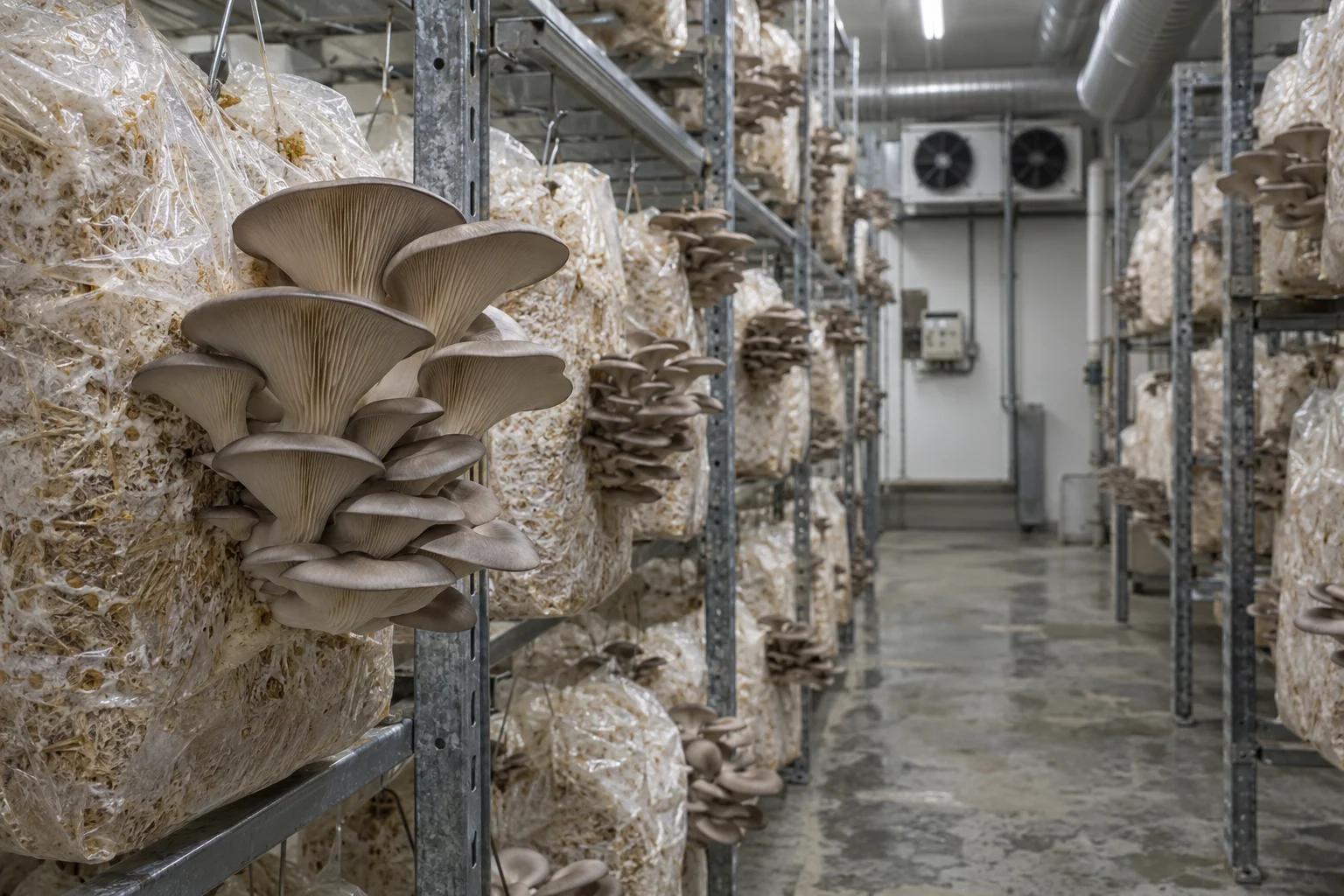
Growing Lion’s Mane Indoors: Substrate, Climate and Harvest Quality
A practical guide to Hericium erinaceus: substrate blocks, fruiting conditions, harvest quality and the real cost of a marketable kilogram.
Explore the guide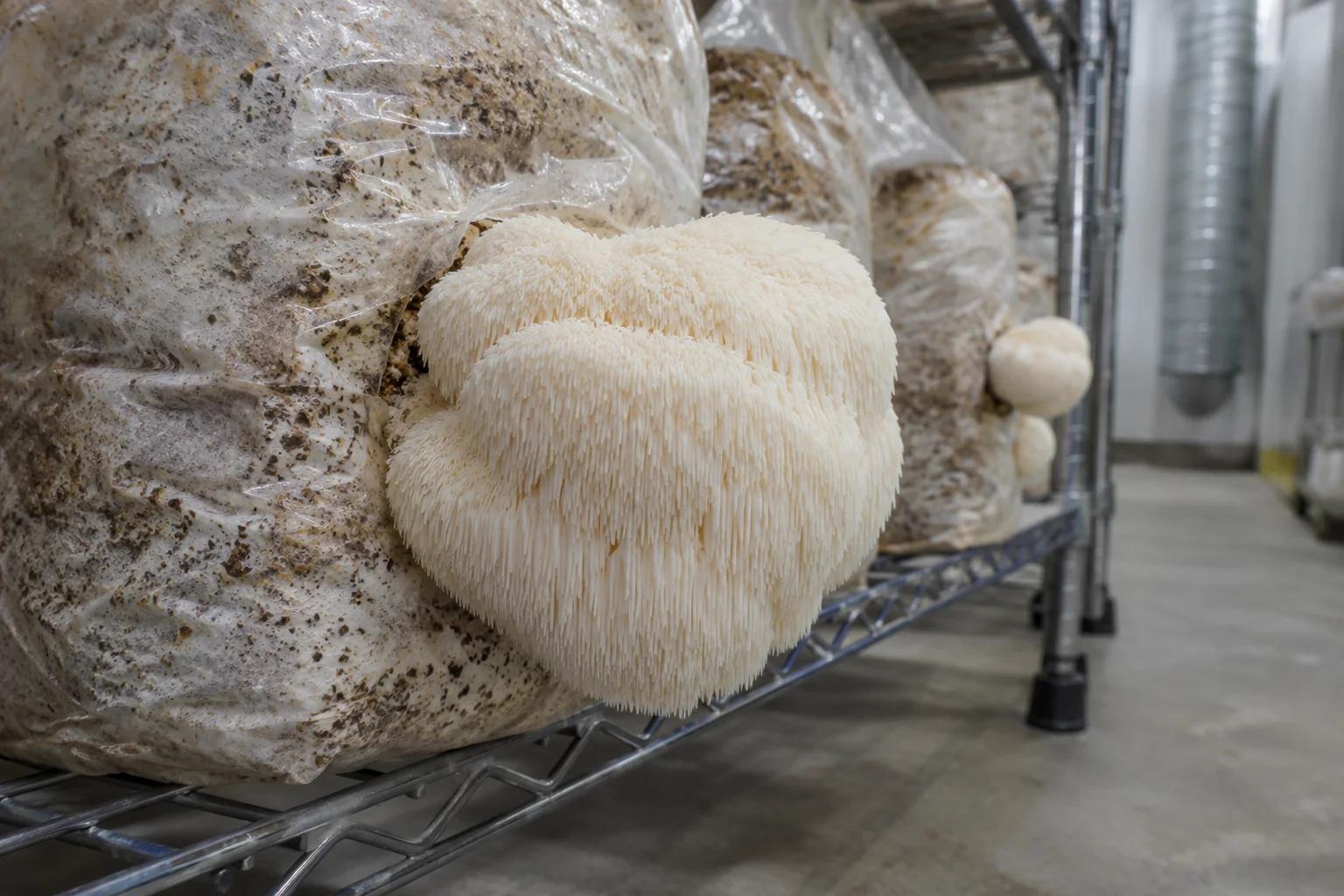
Lion’s mane is an indoor gourmet crop whose value depends on repeatable quality and a buyer for the harvest. Start with a named strain, a documented block and a defined harvest specification. Then connect the room’s measurements to what you actually sell. A high advertised price alone does not make a productive growing room.
Start with the block
Match the strain, substrate and supplier programme before choosing room settings.
Measure saleable quality
Record rejected and unsold harvest as well as total fresh weight.
Check the whole cost
Compare costs per marketable kilogram and per occupied rack-day.
Choose a product and a buyer before filling the room
Hericium erinaceus belongs to the specialty mushrooms cultivated in controlled rooms. Cornell describes both bought-in blocks and on-site block production as business options. Indoor production. For an initial pilot, agree the buyer’s pack size, appearance, delivery days and acceptance criteria. Fresh mushrooms for restaurants, dried product and extract manufacture are different businesses. This guide concerns fresh culinary fruiting bodies. Record the expected sales channel before estimating revenue; retail shelf prices do not equal a grower’s realised price.
Treat the strain and substrate as one production specification
Ask for the strain identity, block wet mass, ingredients, treatment process, inoculation date and expected maturity at delivery. If making blocks, validate preparation, treatment, clean inoculation and incubation as a separate process. A Thai study published in 2023 compared supplemented rubber and bamboo sawdust substrates and found different production outcomes. Substrate study. That is a reason to test substitutions, not to import its recipe unaltered. Compare suppliers using repeat batches, the same harvest grading and the same definition of occupancy.
Separate incubation from the start of fruiting
At receipt, record damaged bags, premature fruiting and unusual development against the delivery batch. Keep suspect material out of the normal flow until assessed. Agree a block-readiness check with the supplier rather than relying only on elapsed days. Document when the bag is opened, the size and position of the opening, and the transfer to the fruiting programme. These decisions affect the comparison between batches. Log room temperature and representative block observations without repeatedly opening bags for inspection.
For a new strain, obtain distinct incubation and fruiting ranges for temperature, humidity, CO₂ and light. A setting copied from an oyster room or a laboratory culture study is not a validated lion’s mane programme. Start with a small identified batch and change one planned variable at a time. Our contamination guide provides a framework for recording and investigating abnormal blocks.
Four handovers that make a batch comparable
- 01Receive
Strain, block batch and delivery condition
- 02Open
Readiness, opening method and room position
- 03Harvest
Grade, marketable weight and cooling
- 04Review
Sold weight, losses and occupied days
Give the fruiting surface moisture without persistent wetness
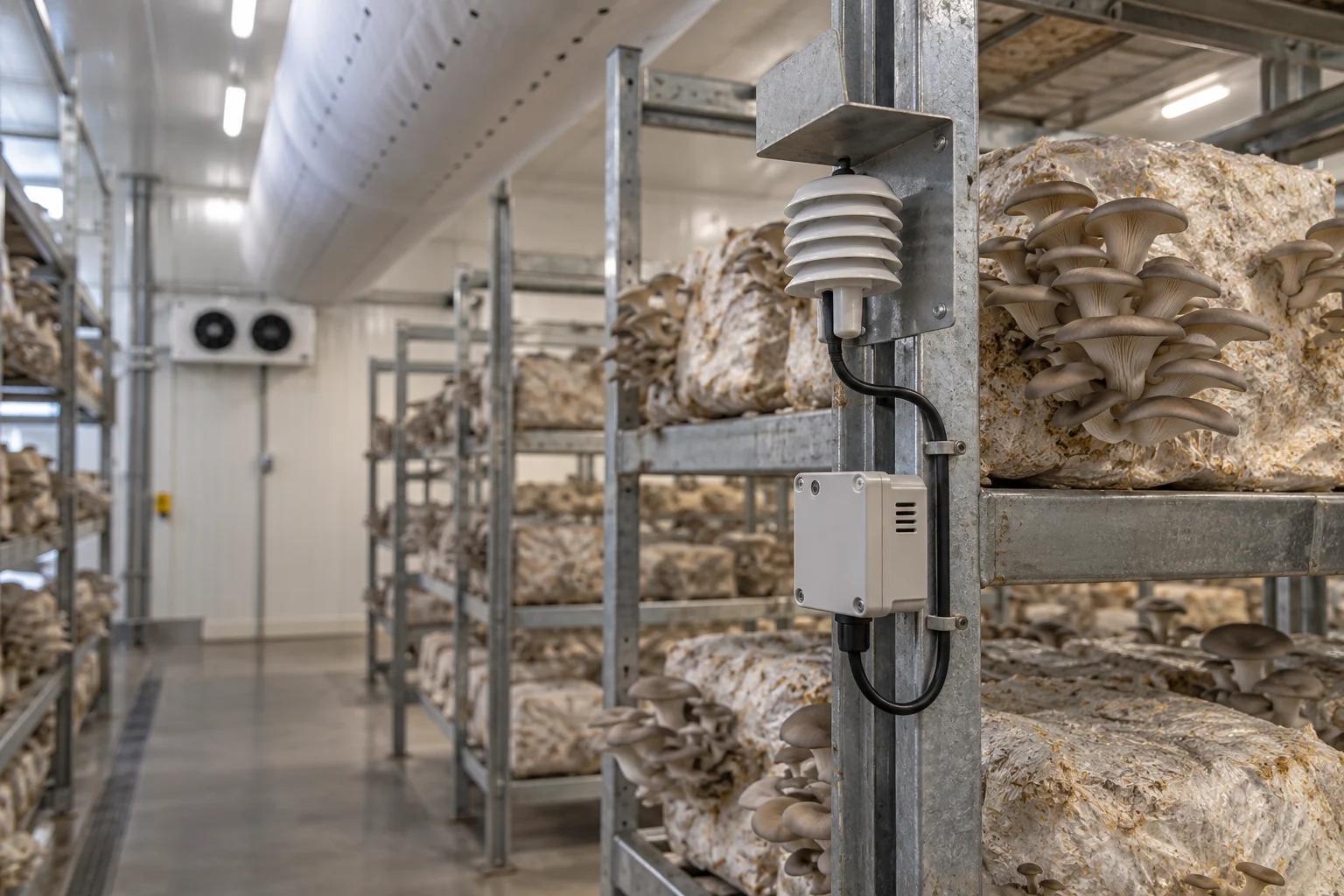
In Hamfy’s proposed commissioning check, compare the air beside representative fruiting bodies with the controller’s main reading. Record CO₂, temperature, relative humidity, fan state and door openings together. A humidifier can satisfy one probe while a nearby draft dries a fruiting surface. Inspect for direct spray and local condensation; a photograph of shape or colour alone does not identify their cause. Follow the supplier’s response plan when quality changes. The fruiting-room climate guide explains how to check spatial differences and sensor reliability.
Define harvest quality and follow the product to delivery
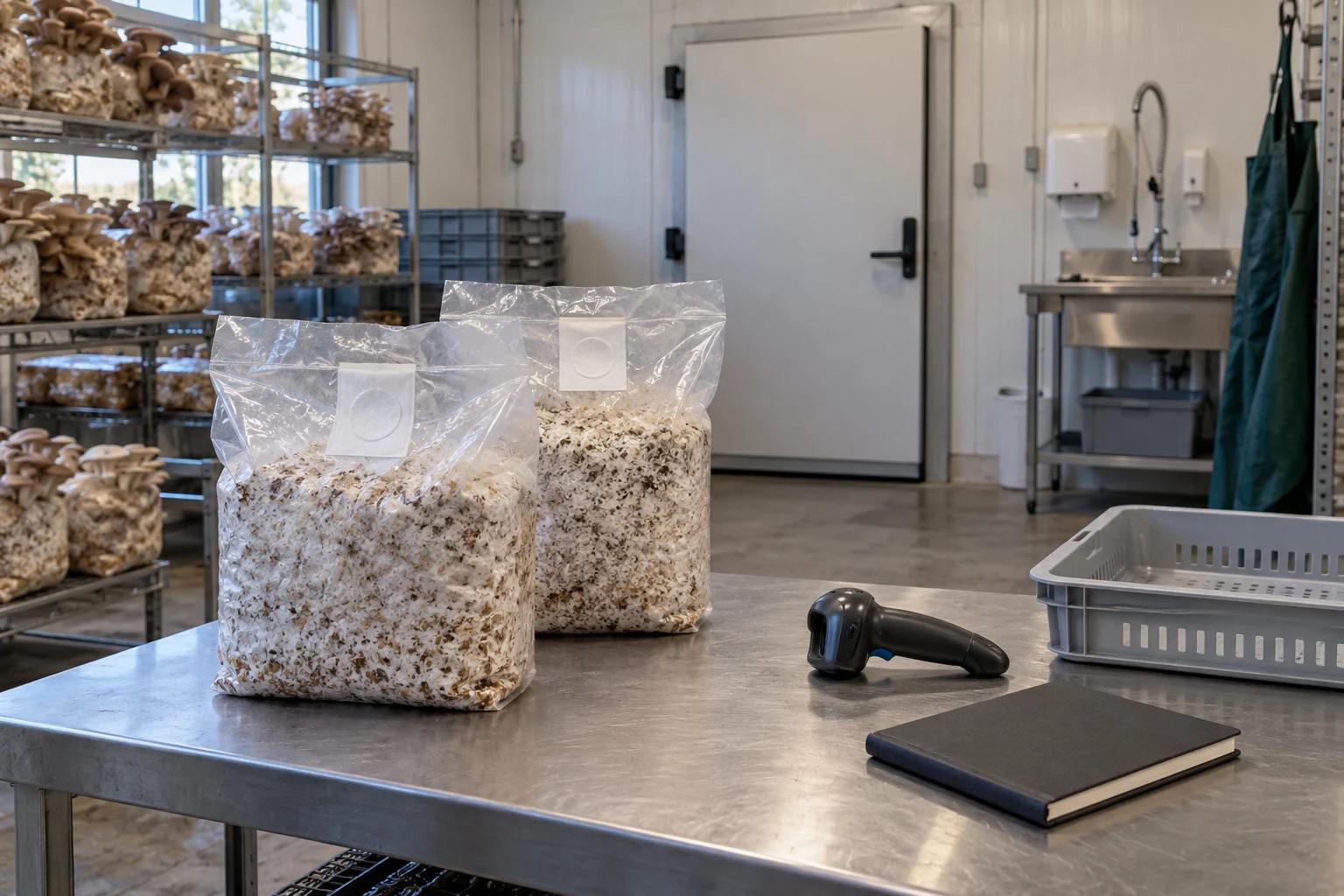
Write a simple grading sheet covering development, colour, firmness, damage and the buyer’s size range. Photograph a consistent view with a scale and batch label kept in the operating record. Record harvest weight before trimming, marketable weight after grading, and any subsequent returns separately. Gentle handling and a suitable cold chain are central to Cornell’s post-harvest guidance. Handling reference. Agree packaging and storage validation for your product; a shelf-life claim needs its own evidence. Log harvest-to-cooling time and delivery condition rather than judging quality only on the rack.
Calculate a premium crop’s cost with losses included
Cornell’s US grower survey from 2021 reported a higher average direct-sale price for lion’s mane than oyster mushrooms. Market evidence. It is historical US evidence, not a current European quotation or a profit forecast. Obtain dated local offers and record what the buyer actually pays after rejects, packaging, transport and sales costs. A useful pilot ledger includes every received block, including failed blocks, and distinguishes harvested, marketable and sold kilograms.
Worked example with invented inputs: a batch costs €600 and yields 50 kg of marketable mushrooms, giving €12/kg. If marketable output falls to 40 kg at the same cost, it becomes €15/kg. If only 35 kg of those 40 kg are sold, the batch cost per sold kilogram is €17.14. These are cost ratios, not selling prices or expected margins. Include allocated labour, energy and overhead in the chosen cost boundary; record what remains outside it.
The denominator changes the cost
| Assumed result | Batch cost | Cost per kilogram |
|---|---|---|
| 50 kg marketable | 600 EUR | 12.00 EUR |
| 40 kg marketable | 600 EUR | 15.00 EUR |
| 35 kg sold | 600 EUR | 17.14 EUR |
Scale the schedule only after repeated deliveries
Track block arrivals, first harvest, later flushes, cleaning and room release on one calendar. A later flush may add kilograms while delaying the next batch. Compare marketable output, labour and contribution per occupied rack-day across comparable cycles. Keep the growing room, cold storage and confirmed orders in the same production plan. Hamfy’s proposed role is to connect those records with climate and camera observations, then investigate a specific bottleneck. A successful first flush is useful evidence; it is not yet proof of reliable weekly supply.
Common questions
Is lion’s mane suitable for indoor cultivation?
Yes. Commercial indoor cultivation is documented. The useful starting point is a strain and substrate supplier with a defined programme, followed by a small monitored batch and confirmed buyers.
Can I use the same climate as oyster mushrooms?
Do not assume that. Confirm the requirements of the specific lion’s mane strain, development stage and block format before sharing a room.
Does a higher price mean a better margin?
Not necessarily. Marketable yield, unsold stock, labour, cooling, energy and occupied space all affect the result. Compare realised sales against a clearly defined cost boundary.
Sources & research
Primary sources selected for this article. Reviewed by Hamfy on .
Evidence brief: lion’s mane production and marketable outputRead the research brief · scope, findings and limitations- Research / technical guidance · n.d.Indoor ProductionCornell Small Farms Program
University overview of indoor production and choices about making or buying blocks.
- Research / technical guidance · 2023Commercial scale production of Yamabushitake mushroom (Hericium erinaceus (Bull.) Pers. 1797) using rubber and bamboo sawdust substrates in tropical regionsChutimanukul et al. · Scientific Reports
Original 2023 substrate comparison in a Thai commercial setting; its formulation and outcomes are context-specific.
- Research / technical guidance · n.d.Post-Harvesting HandlingCornell Small Farms Program
University post-harvest guidance; handling examples need adaptation to the product and buyer.
- Research / technical guidance · 2023Smart Marketing for Specialty MushroomsKristen Park and Steve Gabriel · Cornell Small Farms Program
Published in 2023, reporting a 2021 US survey. Historical prices must not be presented as current European prices.
Have a correction or additional project evidence? Contact the Hamfy team.
Turn a growing problem into a measurable brief.
Bring your room layout, crop programme and existing records. We can discuss the sensors, controls and evidence needed for your next step.