Microbial contamination indoors: plant disease, environmental findings and product quality
Why an environmental finding, a diseased plant and a product test answer different questions — and how sensor data fits into the evidence.
Explore the guide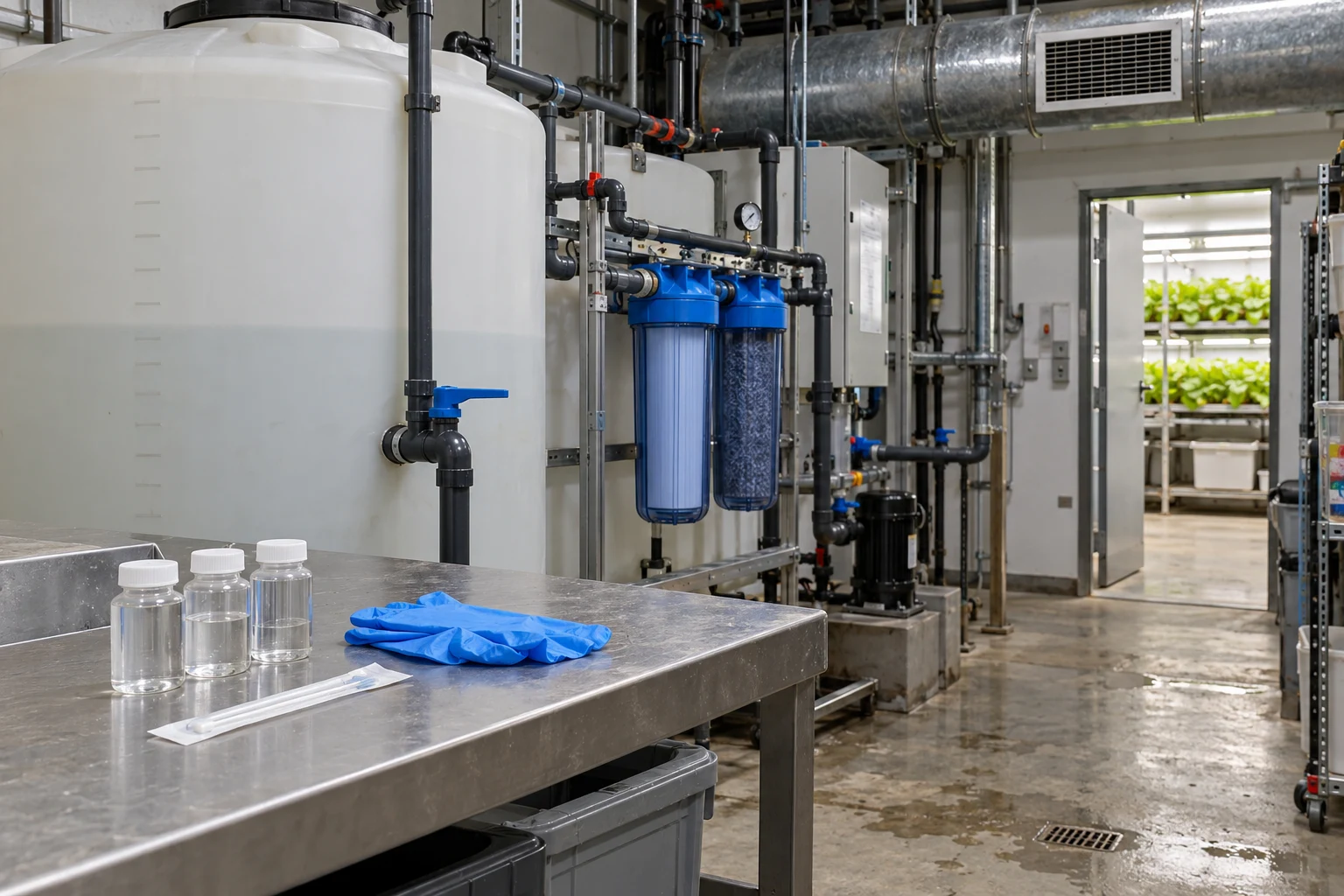
Microbial contamination is not one measurement. A result from a surface, plant tissue, water or a product sample refers to a different material and question. Environmental sensors add context, but they do not turn a climate record into a microbiological test.
Name the material
An air, surface, tissue or product result is evidence about the sampled material.
Read the method
A count, organism identification and toxin test are different outputs.
Keep context separate
Temperature, humidity, pH and EC do not identify microorganisms.
Three questions hidden inside one word
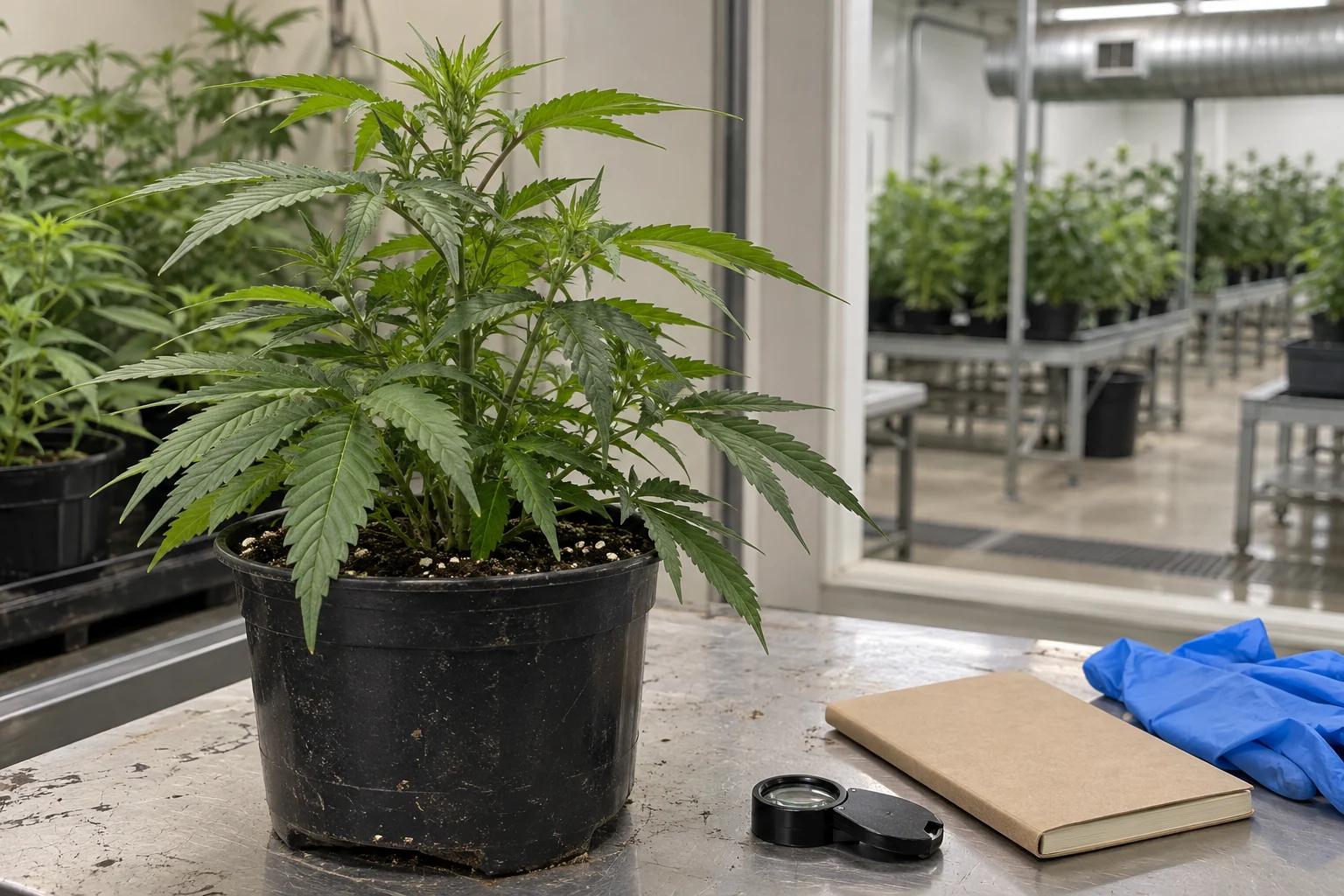
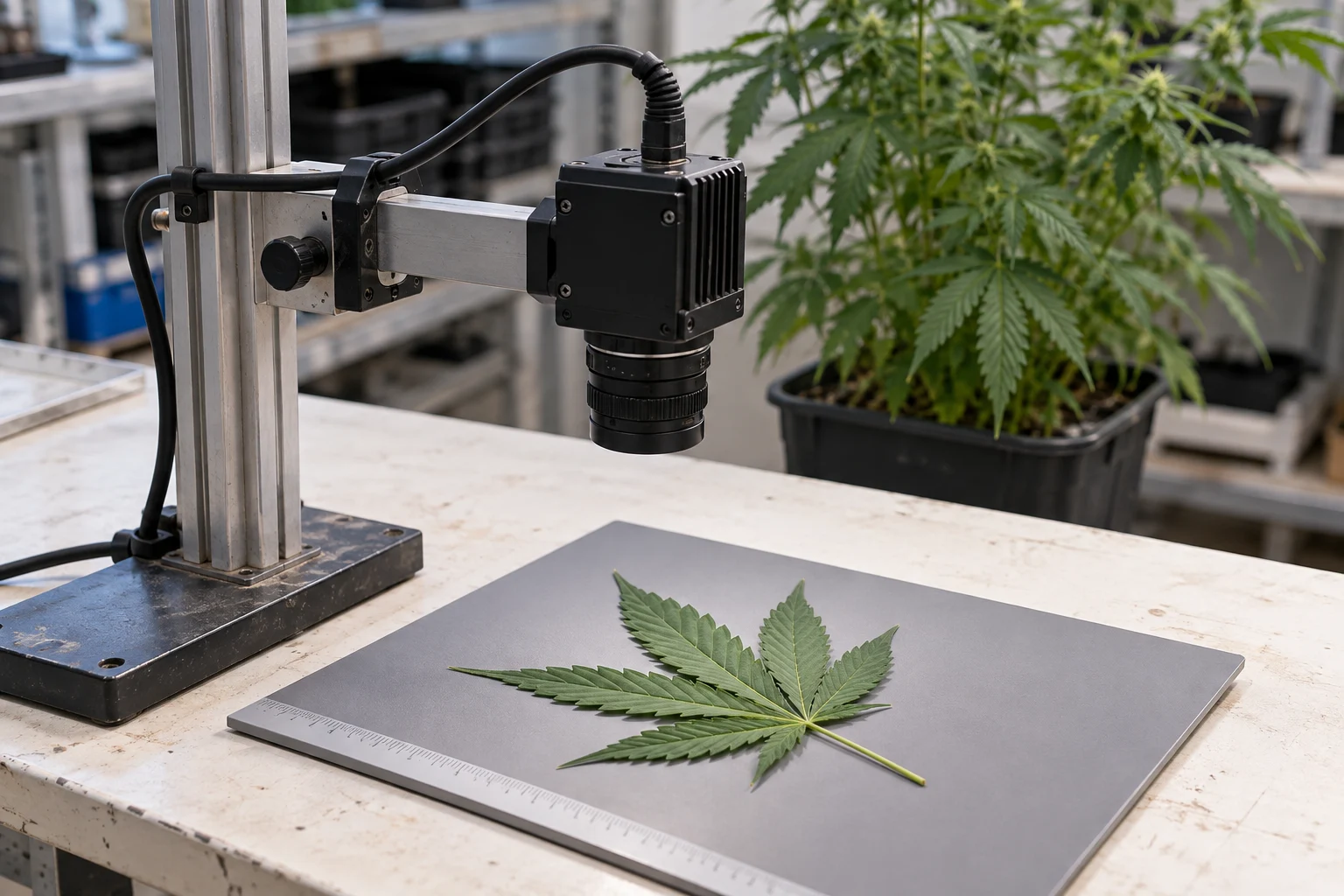
Is a plant diseased? Was an organism detected in the surrounding environment? Does a particular product sample meet a specified quality criterion? These questions can be related, yet none is a substitute for the others. Cannabis research has reported both plant pathogens and environmental moulds. The presence of the latter does not by itself identify the origin of a specific infection or establish a product-quality outcome. Original research.
A total count is not an organism identity
A yeast-and-mould count, a targeted organism test and a toxin measurement describe different properties. The reported unit, sampled material and analytical method matter. An environmental result should not be directly compared with a product limit written for another material or jurisdiction. The FDA’s general sampling guidance also explains why a result must be interpreted within its sampling approach; it is cited here as a measurement principle, not as a cannabis compliance standard. Sampling context.
Match the conclusion to the evidence
| Record | Question it addresses | Avoid this inference |
|---|---|---|
| Plant tissue result | What was found in this tissue sample? | The whole room has the same finding |
| Environmental result | What was found at this sampling point? | This proves the cause of a plant lesion |
| Product sample result | What did this method find in this sample? | Every unit is free of every hazard |
| Sensor history | What conditions did this sensor record? | The sensor identified a microorganism |
What sensors contribute to the record
Sensors can describe the conditions measured at a location and time. A humidity trace is not a spore count; pH and electrical conductivity are not microbiological assays. Combining records can help reconstruct context, but temporal association does not establish which organism caused a problem. Our water-quality article describes the scope of pH and EC, and our sensor-data analyser helps examine the structure of a time series.
A negative result has a boundary
Not detected means not detected by the stated method in the examined sample, subject to its reporting limits. It does not prove that all material or every location is free of every microorganism. Hamfy’s information-design proposal is to keep the sample identity, time, units, test scope and laboratory reference next to the environmental record. That makes comparison more transparent without presenting an engineering dashboard as a laboratory or a product-release certificate. Limits of testing and sampling.
Common questions
Can EC or pH prove that water is microbiologically clean?
No. They measure electrical conductivity and acidity or alkalinity. A microbial claim requires evidence designed to address microorganisms.
Does detecting mould mean a plant disease has been confirmed?
Not necessarily. Environmental presence, tissue infection and contamination of a product are different findings that need their own interpretation.
Does this article define a safe microbial limit for cannabis?
No. It explains how to interpret evidence. It does not specify a universal limit or replace a laboratory report, applicable requirements or a qualified assessment.
Sources & research
Primary sources selected for this article. Reviewed by Hamfy on .
Evidence brief: environmental data and microbiological findingsRead the research brief · scope, findings and limitations- Research source · 2019Pathogens and Molds Affecting Production and Quality of Cannabis sativa L.Punja et al. · Frontiers in Plant Science
Original observations of pathogens and environmental moulds associated with cannabis.
- Research source · 2026Microbiological Surveillance SamplingU.S. Food and Drug Administration
Official explanation of microbiological surveillance and sampling context; not a cannabis-specific standard.
- Research source · 1997HACCP Principles & Application GuidelinesU.S. Food and Drug Administration / NACMCF
General principles describing limitations of microbiological testing and sampling; applied here only to interpretation.
Have a correction or additional project evidence? Contact the Hamfy team.
Connect observations with evidence.
Discuss a monitoring brief that keeps camera images, environmental records and verified findings in context.